1. Product Properties
Trichloroisocyanuric Acid, also known as TCCA, is a low‑toxicity, fast‑acting industrial bactericide with strong sterilizing performance among chlorinated isocyanuric acid products. It can rapidly and effectively kill various bacteria, fungi, spores, moulds and Vibrio cholerae. It also delivers functions of algae elimination, deodorization, water purification and bleaching.
TCCA is widely used for swimming pool disinfection, drinking‑water disinfection, industrial circulating‑water treatment, food processing industry, catering hygiene, aquaculture, daily chemical industry, medical facilities, nurseries, epidemic prevention, garbage disposal, hotels, restaurants, and large‑scale sterilization for infection prevention after natural disasters and accidents.
| Item | Specification |
|---|
| Appearance | White powder, granules and various white tablets |
| Mesh Size | 8‑30 mesh; 20‑40 mesh, etc. |
| Tablet Weight | 5g/tablet, 10g/tablet, 20g/tablet, 50g/tablet, 100g/tablet, 200g/tablet |
2. Performance Specifications
| Item | Premium Grade | First Grade | Qualified Grade |
|---|
| Available Chlorine Content % ≥ | 90.0 | 89.0 | 88.0 |
| Moisture Content % ≤ | 0.5 | 0.8 | 1.0 |
| pH Value (1% solution) | 2.6‑3.2 | 2.6‑3.2 | 2.6‑3.2 |
3. Product Applications
- TCCA is applied for sterilization and disinfection of drinking water and swimming pools. Thanks to its slow‑dissolving property and long‑lasting effective period of solution, it is especially suitable for swimming‑pool water disinfection and sterilization.
- TCCA can be formulated into disinfectant detergents, stain removers, cleaners and deodorants.
- It is used for sterilization and deodorization of septic tanks and sewers, as well as disinfection in infectious‑disease zones.
- It can be used for sterilization and disinfection in livestock breeding, aquaculture, poultry raising, sericulture and seed plant protection; for disinfection, antisepsis and fresh‑keeping of fruits and vegetables.
- It is applied for algae prevention of industrial circulating water, environmental‑friendly treatment of industrial and domestic sewage, and sterilization of petroleum‑drilling mud wastewater.
- TCCA serves as bleaching agent and cold bleaching agent in textile industry. Containing no alkaline substances, it will not damage fabrics and brings satisfactory bleaching effect for cotton, linen and synthetic fibers. In wool textile industry, it acts as processing agent and shrink‑proof agent for wool and cashmere. It can be used as oxidizing agent and chlorinating agent in chemical synthesis, deodorant for dextrin, and raw material for seawater batteries.
- It works as bleaching agent for high‑grade paper. It leaves no residue after dissolution, making it an ideal bleaching agent for premium paper.
4. Usage Method
- Disinfection for toilet and sanitary ware: Dilute TCCA with 300‑fold water, keep contact for 30 minutes.
- Disinfection for public areas and ground: Spray and wipe with 1500‑3000‑fold aqueous solution for 30‑minute contact. For infectious‑disease epidemic areas, spray with 150‑200‑fold diluted solution.
- Disinfection for white clothes and bed sheets: Soak clean articles in 2000‑3000‑fold diluted solution for 10 minutes. For heavily contaminated articles, soak in 500‑fold diluted solution for 20 minutes.
- Swimming pool disinfection: Dose at 2‑3 g/m³, maintain contact for 30‑60 minutes.
- Disinfection for non‑metallic medical instruments: Soak in 500‑1000‑fold diluted solution for 30 minutes. For instruments with blood and pus contamination, use 100‑fold diluted solution with 30‑minute contact time.
- Disinfection for non‑metallic tableware: Soak in 500‑1000‑fold diluted solution for 30 minutes.
5. Packaging and Storage
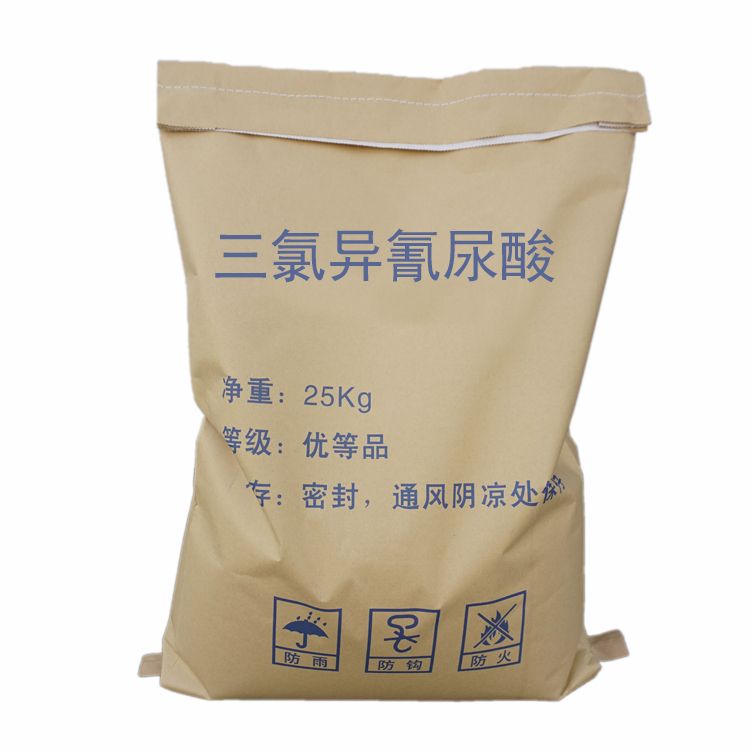
Trichloroisocyanuric Acid is packed in fiber drums or plastic drums (net weight: 25 kg, 50 kg), or plastic woven bags (net weight: 25 kg, 50 kg, 100 kg). Custom‑made packaging is available upon customer’s requirements.
Store TCCA in well‑ventilated and dry place. Keep away from moisture, water, rain and fire. Avoid package damage during transportation. Shelf life: 2 years.