Common heavy‑metal pollutants include Mercury (Hg), Lead (Pb), Cadmium (Cd), Manganese (Mn), Chromium (Cr), Copper (Cu), Nickel (Ni), Zinc (Zn), etc. Heavy metals cannot be replaced during industrial processing, which often results in excessive heavy‑metal ions in wastewater. Due to their toxicity, heavy‑metal ions cannot be naturally decomposed after discharge in excess of limits. Therefore, the content of heavy‑metal ions in wastewater and waste gas is strictly regulated by national standards.
Common heavy‑metal pollutants include Mercury (Hg), Lead (Pb), Cadmium (Cd), Manganese (Mn), Chromium (Cr), Copper (Cu), Nickel (Ni), Zinc (Zn), etc. Heavy metals cannot be replaced during industrial processing, which often results in excessive heavy‑metal ions in wastewater. Due to their toxicity, heavy‑metal ions cannot be naturally decomposed after discharge in excess of limits. Therefore, the content of heavy‑metal ions in wastewater and waste gas is strictly regulated by national standards.
Heavy‑metal ion catcher, also known as organic sulfur, is a water‑treatment agent (TMT‑15 organic sulfide) independently developed by our company based on actual water quality of heavy‑metal‑containing wastewater. At room temperature, it can rapidly react with various heavy‑metal ions (Hg, Pb, Cu, Cd, Ni, Mn, Zn, Cr, etc.) in wastewater to form water‑insoluble chelates with favorable chemical stability, so as to capture and remove heavy metals. It serves as an ideal alternative to imported similar metal‑ion chelating agents.
Key properties are listed below:
① Test the concentration of heavy‑metal ions in wastewater, and determine agent dosage via simulated wastewater dosing tests.
② For better performance, adjust wastewater pH value to 7‑9 before adding the agent.
③ Calculate total daily dosage according to daily wastewater throughput. Before dosing, dilute the measured heavy‑metal ion catcher to 1‑2 % concentration in dedicated dosing system, then feed into wastewater continuously or in batches, and stir for 5‑10 minutes.
④ Allow 10‑minute standing before separating heavy‑metal precipitates from water. Filter the precipitates with filter press to obtain filter cakes. Heavy‑metal‑containing filter cakes shall be land‑filled as non‑leaching‑toxic waste. The filtered water can meet discharge standards.
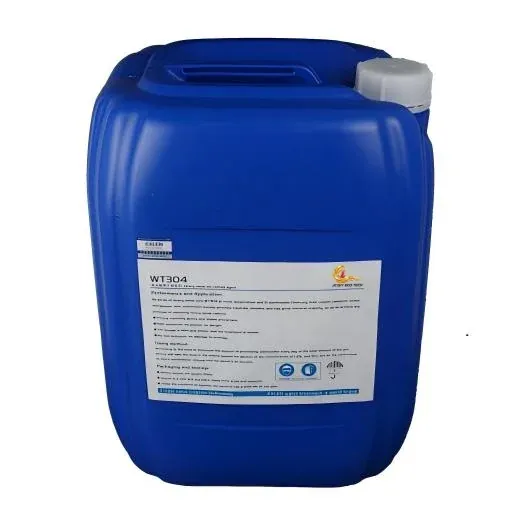
WT‑304 Heavy Metal Ion Catcher is normally packed in plastic drums with net weight of 25 kg. Store in cool and dry place, keep away from acids and oxidants. Under specified storage conditions, the shelf life is 12 months.