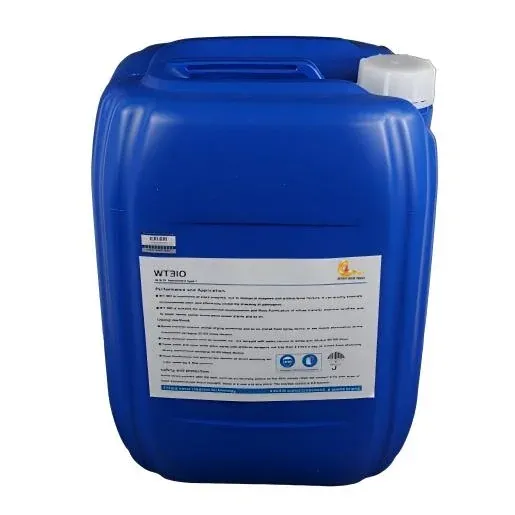
1. Performance and Application
WT‑310 Deodorant Type Ⅰ is a plant‑based deodorant compounded with plant enzymes, bio‑enzymes and bacteriostatic factors. It eliminates environmental malodor and effectively inhibits the reproduction of pathogenic bacteria. It is mainly applied for odor control at waste transfer stations, landfills, public toilets, livestock farms, waste‑to‑energy power plants, as well as river water purification.
2. Usage & Dosage
- Indoor deodorization for waste transfer stations, sludge‑drying workshops, livestock farms: Dilute by 10‑20 times. Apply intermittent spraying via fixed atomizing equipment or mobile atomizing devices.
- Large‑scale outdoor sites such as waste landfills and sludge yards: Dilute the plant‑based deodorant by 30‑50 times, deploy air‑blast sprayers for spraying.
- Small‑space deodorization for public toilets: Dilute by 10‑20 times. Spray manually with sprayer no less than twice per day, or adopt fixed intermittent atomizing system.
- River purification: Dilute appropriately and pour directly onto water surface. 3‑4 kg neat deodorant per cubic meter of water body.
3. Precautions
- Avoid direct skin contact. In case of accidental splashing onto skin, wash the contacted area with soap or hand sanitizer.
- Keep WT‑310 Deodorant Type Ⅰ away from direct sunlight. Store in cool and ventilated place. Shelf‑life: 2 years.