
Isothiazolinone

Isothiazolinone is a water‑treatment biocide mainly composed of 5‑chloro‑2‑methyl‑4‑isothiazolin‑3‑one (CMI) and 2‑methyl‑4‑isothiazolin‑3‑one (MI. It exerts biocidal effect by breaking protein bonds of bacteria and algae. Upon contact with microorganisms, it rapidly and irreversibly inhibits microbial growth and leads to cell death, hence delivering strong killing effect against common bacteria, fungi and algae.

LH-103 Heavy Degreaser (5kg)
  • Isothiazolinone
0
  • Product details
  • Relative Molecular Weight: 115.16 

    Components: 2‑Methyl‑4‑isothiazolin‑3‑one (MI), 5‑Chloro‑2‑methyl‑4‑isothiazolin‑3‑one (CMI)

    1. Performance and Application

    Isothiazolinone is a water‑treatment biocide mainly composed of 5‑chloro‑2‑methyl‑4‑isothiazolin‑3‑one (CMI) and 2‑methyl‑4‑isothiazolin‑3‑one (MI. It exerts biocidal effect by breaking protein bonds of bacteria and algae. Upon contact with microorganisms, it rapidly and irreversibly inhibits microbial growth and leads to cell death, hence delivering strong killing effect against common bacteria, fungi and algae.

    1. This biocide features high biocidal efficiency, good degradability, no residue, safe operation, good compatibility, high stability and low application cost.
    2. It is miscible with chlorine and most anionic, cationic and non‑ionic surfactants. High dosage brings prominent slime‑stripping performance.
    3. As a broad‑spectrum, low‑toxic and non‑oxidizing biocide, isothiazolinone is widely used in oilfield, paper‑making, pesticide, cutting fluid, leather, ink, dye, tanning and other industries.

    Note: Custom concentrations such as 2 %, 6 %, 8 % are available upon customer request.

    2. Technical Specifications

    ItemHG/T 3657‑2017‑Class IHG/T 3657‑2017‑Class II
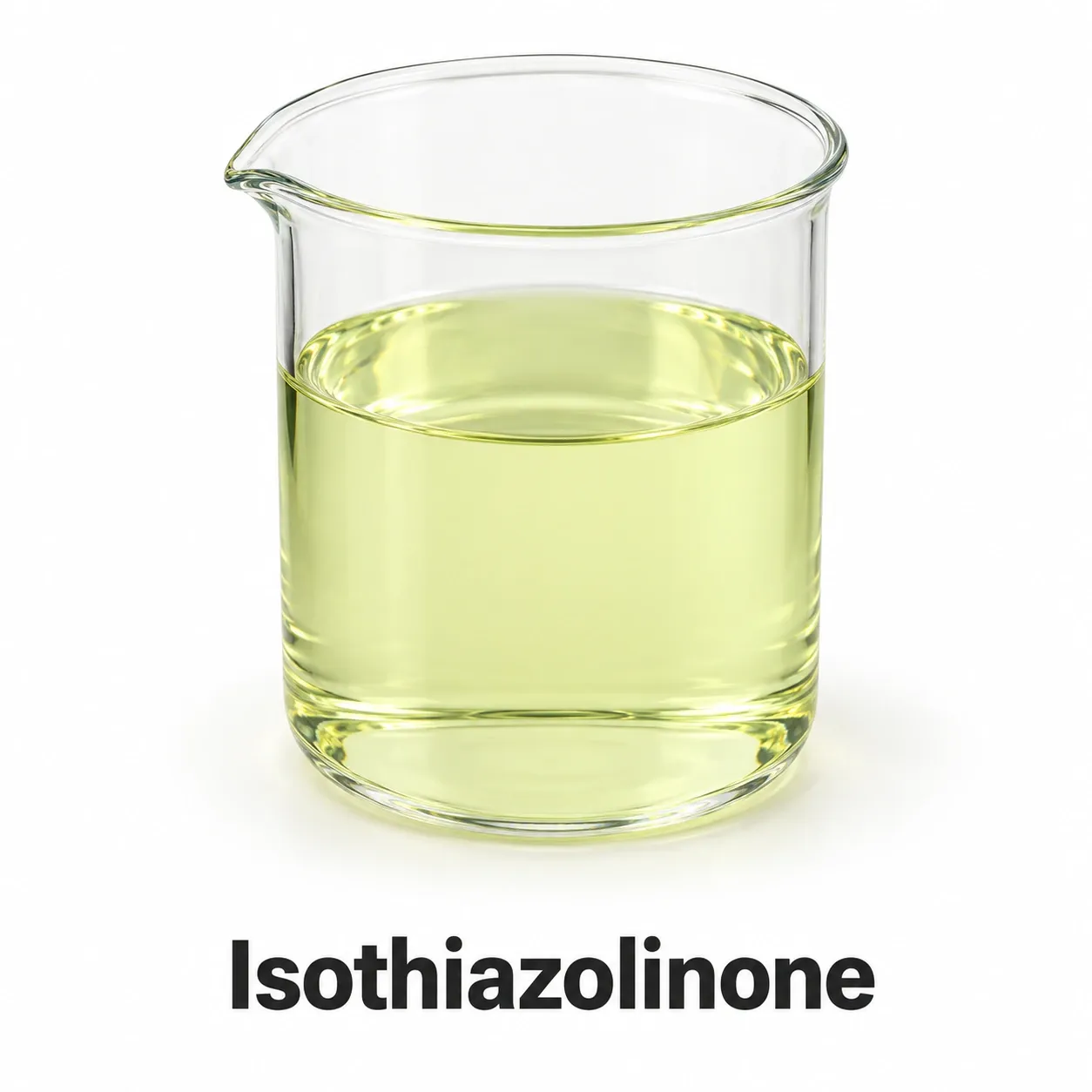
    AppearanceColorless to light‑yellow or light‑green transparent liquidColorless to light‑yellow or light‑green transparent liquid
    Active Substance Content %14.0‑15.0≥2.0
    pH (raw liquid)2.0‑4.02.0‑5.0
    Density (20℃), g/cm³1.24‑1.32≥1.03
    CMI/MI (mass ratio)2.5‑3.42.5‑3.4

    3. Usage Method

    1. Dosage: 150‑300 mg/L for slime‑stripping treatment; for biocidal treatment, dose 80‑100 mg/L every 3‑7 days.
    2. It can be used together with chlorine and other oxidizing biocides. Not applicable for cooling‑water systems containing sulfide. Better performance can be obtained when compounded with quaternary ammonium salts.
    3. When used as mildew inhibitor for industrial water treatment, general working concentration is 0.05‑0.4 %.

    4. Packaging and Storage

    Packed in plastic drums of 25 KG or customized size per customer requirements. Store in cool indoor area. Shelf life: 10 months.

    5. Safety & Protection

    1. Isothiazolinone is corrosive to skin. It may cause skin burn and allergic dermatitis with symptoms lasting for hours.
    2. Strictly avoid skin and eye contact. Wear protective goggles and rubber gloves during handling. In case of accidental contact, remove contaminated clothing and shoes immediately, flush affected area with plenty of clean water for at least 15 minutes, apply urea acetate ointment or burn ointment and seek medical attention promptly.

    Relative Molecular Weight: 115.16 

    Components: 2‑Methyl‑4‑isothiazolin‑3‑one (MI), 5‑Chloro‑2‑methyl‑4‑isothiazolin‑3‑one (CMI)

    1. Performance and Application

    Isothiazolinone is a water‑treatment biocide mainly composed of 5‑chloro‑2‑methyl‑4‑isothiazolin‑3‑one (CMI) and 2‑methyl‑4‑isothiazolin‑3‑one (MI. It exerts biocidal effect by breaking protein bonds of bacteria and algae. Upon contact with microorganisms, it rapidly and irreversibly inhibits microbial growth and leads to cell death, hence delivering strong killing effect against common bacteria, fungi and algae.

    1. This biocide features high biocidal efficiency, good degradability, no residue, safe operation, good compatibility, high stability and low application cost.
    2. It is miscible with chlorine and most anionic, cationic and non‑ionic surfactants. High dosage brings prominent slime‑stripping performance.
    3. As a broad‑spectrum, low‑toxic and non‑oxidizing biocide, isothiazolinone is widely used in oilfield, paper‑making, pesticide, cutting fluid, leather, ink, dye, tanning and other industries.

    Note: Custom concentrations such as 2 %, 6 %, 8 % are available upon customer request.

    2. Technical Specifications

    ItemHG/T 3657‑2017‑Class IHG/T 3657‑2017‑Class II
    AppearanceColorless to light‑yellow or light‑green transparent liquidColorless to light‑yellow or light‑green transparent liquid
    Active Substance Content %14.0‑15.0≥2.0
    pH (raw liquid)2.0‑4.02.0‑5.0
    Density (20℃), g/cm³1.24‑1.32≥1.03
    CMI/MI (mass ratio)2.5‑3.42.5‑3.4

    3. Usage Method

    1. Dosage: 150‑300 mg/L for slime‑stripping treatment; for biocidal treatment, dose 80‑100 mg/L every 3‑7 days.
    2. It can be used together with chlorine and other oxidizing biocides. Not applicable for cooling‑water systems containing sulfide. Better performance can be obtained when compounded with quaternary ammonium salts.
    3. When used as mildew inhibitor for industrial water treatment, general working concentration is 0.05‑0.4 %.

    4. Packaging and Storage

    Packed in plastic drums of 25 KG or customized size per customer requirements. Store in cool indoor area. Shelf life: 10 months.

    5. Safety & Protection

    1. Isothiazolinone is corrosive to skin. It may cause skin burn and allergic dermatitis with symptoms lasting for hours.
    2. Strictly avoid skin and eye contact. Wear protective goggles and rubber gloves during handling. In case of accidental contact, remove contaminated clothing and shoes immediately, flush affected area with plenty of clean water for at least 15 minutes, apply urea acetate ointment or burn ointment and seek medical attention promptly.