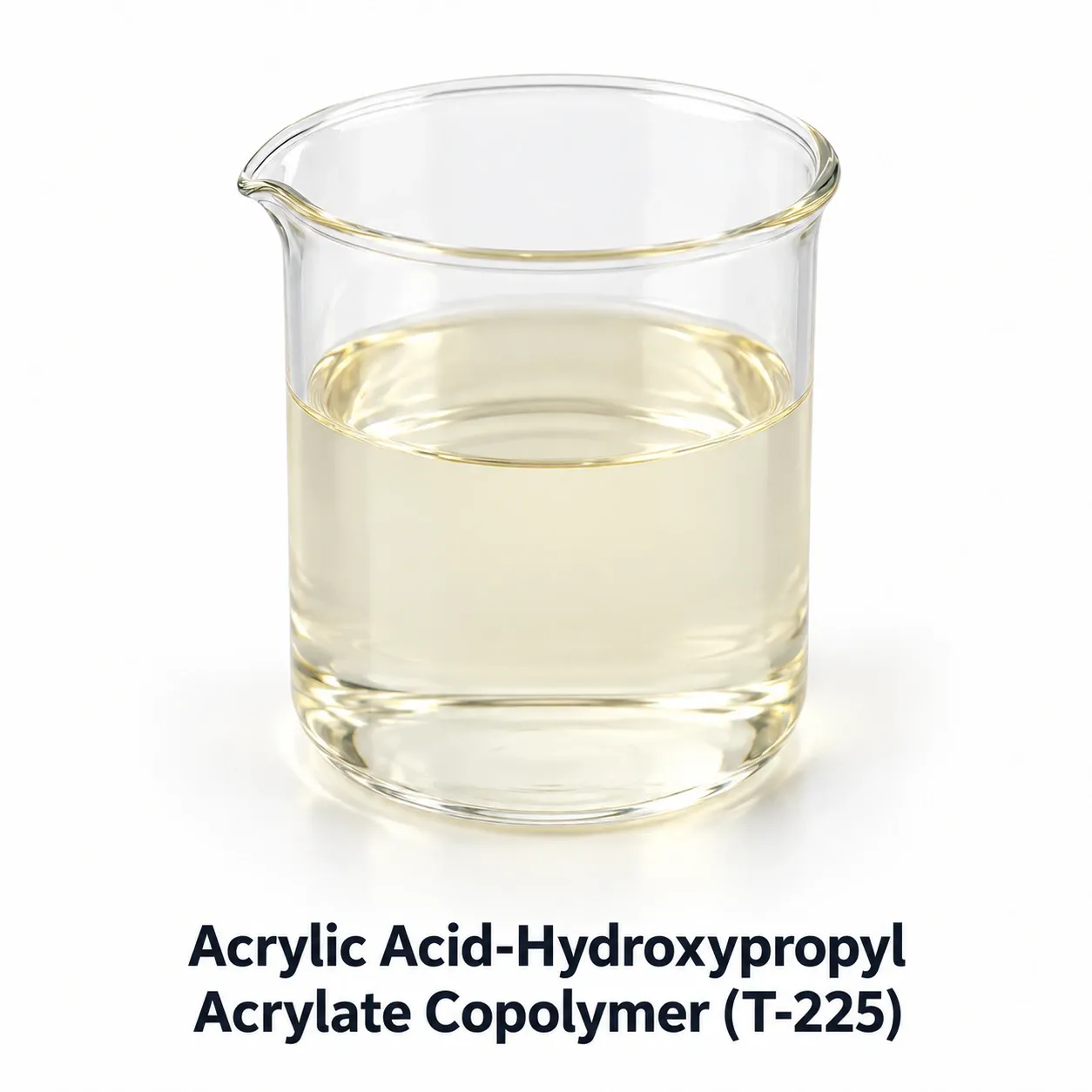
Alias: AA/HPA Copolymer1. Performance and ApplicationT‑225 is acrylic acid‑hydroxypropyl acrylate copolymer. It delivers good control over formation and deposition of calcium carbonate, calcium sulfat
Alias: AA/HPA Copolymer
T‑225 is acrylic acid‑hydroxypropyl acrylate copolymer. It delivers good control over formation and deposition of calcium carbonate, calcium sulfate, especially calcium phosphate. It also exhibits excellent dispersing performance for ferric oxide, sludge, clay and oil sludge. AA/HPA copolymer can be used under high‑pH conditions, features good miscibility with organic phosphonates, BTA and other substances, and performs well in controlling zinc salt deposition and calcium‑phosphate scale precipitation.
| Item | Neutral | Acidic (HG/T2429‑2014) |
|---|---|---|
| Appearance | Colorless to yellow liquid | Colorless to yellow liquid |
| Solid Content % ≥ | 30.0 | 30.0 |
| Free Monomer (as AA) % ≤ | 0.5 | 0.5 |
| pH (1% solution) | 7.5±1.0 | 2.0‑3.0 |
| Intrinsic Viscosity (30℃), dl/g | 0.065‑0.095 | 0.065‑0.095 |
| Density (20℃), g/cm³ ≥ | 1.10 | 1.10 |
Normal dosage: 10‑30 mg/L. It can be compounded with organic phosphonates to formulate fully‑organic (alkaline) formulas.
AA/HPA copolymer is normally packed in plastic drums of 25 KG or 200 KG; packaging can be adjusted per customer requirements. Store in cool and well‑ventilated indoor area. Shelf life: 12 months.
T‑225 is slightly corrosive. Take labor‑protection measures during operation. Avoid contact with skin and eyes. Rinse with plenty of clean water upon contact.